Choosing pallets may seem straightforward, but the wrong pallet can create unnecessary problems across storage, handling and transport.
For businesses in Sydney and NSW, pallets are used every day across warehouses, manufacturing facilities, distribution centres, retail operations and freight networks. The right pallet needs to suit more than just the size of your products. Load weight, warehouse equipment, storage systems, transport requirements and how often the pallet will be reused can all influence the best option.
Whether you are purchasing a small quantity or arranging ongoing pallet supply, understanding the different pallet sizes and types can help you make a more practical and cost-effective decision.
Start With the Size of Your Products
The first consideration is the footprint of the goods being stored or transported.
A pallet should provide adequate support for the load without creating excessive overhang. Products extending too far beyond the edges of a pallet may be more difficult to stabilise and can increase the risk of damage during handling and transport.
Before choosing a pallet, consider:
- The length and width of your products
- How the goods will be stacked
- The total weight of each load
- Whether the load is uniform or irregularly shaped
- Whether the pallet will be used for storage, transport or both
Businesses handling a consistent product range may benefit from standardising their pallet sizes. This can make warehouse operations easier and improve compatibility with storage and transport systems.
Understand the Most Common Pallet Types
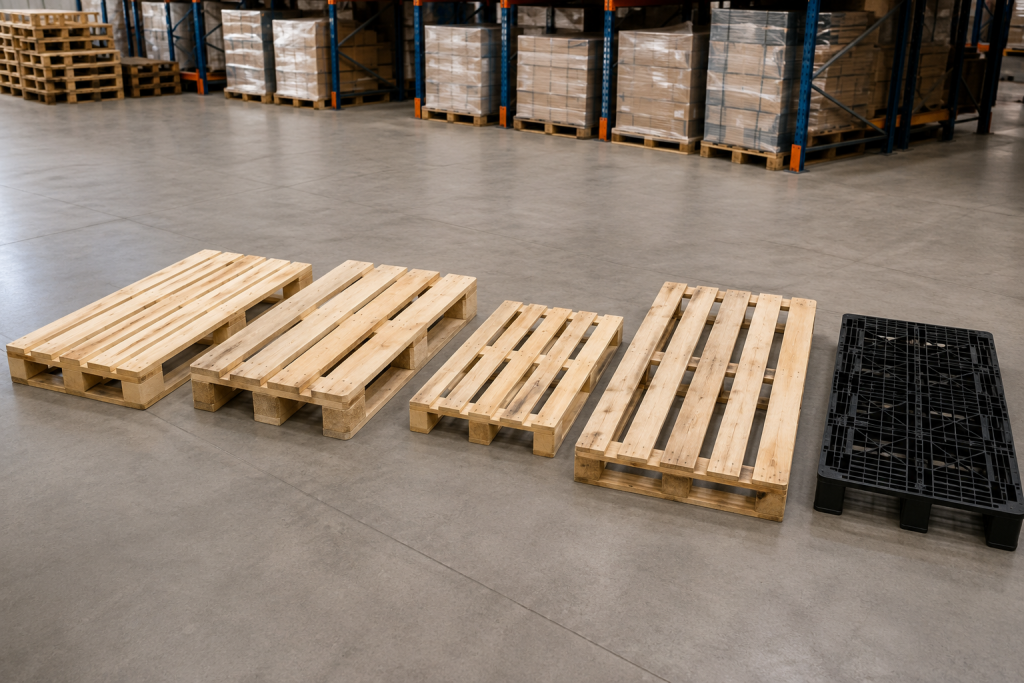
Different pallet formats are designed for different operational requirements.
Australian Standard Pallets
Australian Standard pallets are commonly used across local warehousing, transport and distribution operations. A2Z Pallets supplies Australian Standard light and heavy-weight pallets in the widely used 1165 × 1165 mm format.
They can be suitable for businesses that need a familiar format for general warehouse movement, storage and freight.
Block Pallets
Block pallets can provide four-way entry, allowing forklifts and other handling equipment to access the pallet from multiple sides.
This can be useful for warehouses where efficient movement and flexible handling are important.
Euro Pallets
Euro pallets are commonly associated with European supply chains and use a 1200 × 800 mm footprint.
They may be suitable for businesses managing specific import, export or international logistics requirements.
American Pallets
American pallets generally follow the commonly used 48 × 40-inch format and are widely used in North American logistics and supply chains.
For Sydney and NSW businesses dealing with international freight, using the appropriate pallet format can help improve compatibility across different parts of the supply chain.
Used Plastic Pallets
Plastic pallets may be suitable where durability, reusability or hygiene requirements are important.
They are often considered for operations involving food processing, pharmaceutical handling and other environments where a non-timber option may be preferred.
Consider How Much Weight the Pallet Needs to Carry
Not every pallet is designed for the same load.
A light-weight pallet may be suitable for general storage and lighter freight, while heavier products may require a heavy-duty pallet with greater load-bearing capability.
When reviewing pallet options, think about:
- Static load requirements
- Dynamic loads during forklift movement
- How high the pallets will be stacked
- Whether they will be placed in racking
- How often they will be moved
A pallet that works well for a one-time shipment may not be the right choice for repeated warehouse handling.
Check Your Warehouse and Handling Equipment
The pallet you choose should work with the equipment already used at your site.
This includes forklifts, pallet jacks, warehouse racking, conveyors and loading docks.
For example, the pallet entry points need to be suitable for the equipment used by your team. The overall dimensions should also work with your warehouse layout and storage systems.
Before placing a bulk pallet order in Sydney or NSW, it is worth reviewing the full movement process from receiving goods through to storage and final dispatch.
Think About Transport and Delivery Requirements
The right pallet should also fit the way your products move outside the warehouse.
Consider whether the goods are being:
- Delivered locally
- Transported interstate
- Loaded into containers
- Exported internationally
- Moved between multiple warehouse locations
International shipments may have additional requirements, including export treatment and compliance considerations. These requirements should be confirmed before selecting pallets for export freight.
Should You Choose New, Reconditioned or Used Pallets?
For many businesses, reconditioned pallets can provide a practical alternative to purchasing new pallets.
A quality reconditioned pallet can be suitable for repeated commercial use while helping businesses manage pallet costs and keep usable materials in circulation.
The best choice will depend on your operational requirements, load type and the condition needed for the intended application.
Choosing the Right Pallet Supplier in Sydney and NSW
The right supplier should be able to help you look beyond simply choosing the cheapest pallet.
A practical pallet solution should consider the type of goods you move, the quantity required, delivery requirements and whether you need ongoing supply.
A2Z Pallets supplies a range of timber and plastic pallet options across Sydney and NSW, including Australian Standard, block, Euro and American pallets, along with bulk supply and custom pallet support.
Final Thoughts
Choosing the right pallet size and type can make a real difference to how efficiently your business stores, handles and transports goods.
Instead of selecting a pallet based only on price, consider the full picture: product size, load weight, handling equipment, warehouse layout, transport requirements and how often the pallet will be reused.
For businesses looking for pallets in Sydney or across NSW, reviewing these factors before ordering can help create a more reliable and cost-effective pallet solution.
