When exporting goods internationally, businesses need to consider more than the products being shipped. The wooden pallets, crates and other packaging materials used to transport those goods may also need to meet international biosecurity requirements.
One important regulation is ISPM 15, an international standard designed to reduce the risk of spreading timber pests through international trade.
For Australian manufacturers, exporters and logistics businesses, understanding these requirements is essential when selecting wooden pallets for export consignments.
What Is ISPM 15?
ISPM 15 stands for International Standards for Phytosanitary Measures No. 15. It is an international standard developed under the International Plant Protection Convention (IPPC).
The standard regulates solid wood packaging materials used in international trade to reduce the risk of introducing and spreading timber pests between countries.
It applies to several types of wooden packaging, including:
- Wooden pallets
- Timber crates and boxes
- Dunnage used to support or secure cargo
- Wooden packing blocks
- Pallet collars and skids
- Wooden drums and reels
The standard generally applies to both hardwood and softwood packaging materials.
Why Is ISPM 15 Important for Australian Exporters?
Wooden packaging can carry insects, larvae and other pests that may not be visible during a routine inspection.
When untreated timber packaging crosses international borders, it can create a pathway for pests to enter new environments.
ISPM 15 establishes treatment and marking requirements to help manage this biosecurity risk.
For Australian exporters, non-compliant wooden packaging can result in:
- Delays during customs and biosecurity inspections.
- Additional treatment or disposal requirements.
- Extra handling and storage costs.
- Shipment disruptions.
- Possible rejection of the affected consignment.
Importing countries may apply different biosecurity procedures, so exporters should confirm the applicable requirements before dispatching goods.
What Are the Treatment Requirements Under ISPM 15?
Wooden packaging must undergo an approved treatment and carry the appropriate international certification mark.
The recognised treatment methods include:
1. Heat Treatment (HT)
Heat treatment is one of the commonly used methods for ISPM 15 compliance.
Under the conventional heat treatment method, the wood must reach a minimum core temperature of 56°C for at least 30 continuous minutes.
The treatment helps eliminate regulated pests that may be present within the timber.
2. Methyl Bromide Fumigation (MB)
Methyl bromide fumigation is another treatment method recognised under ISPM 15.
It involves exposing wooden packaging to a controlled fumigation process under specified conditions.
The treatment must be carried out by an appropriately certified provider and meet the applicable standard requirements.
The availability and acceptance of treatment methods can depend on current regulations and the importing country’s requirements.
How to Identify an ISPM 15-Compliant Pallet
One of the easiest ways to identify treated wooden packaging is by checking its ISPM 15 certification mark.
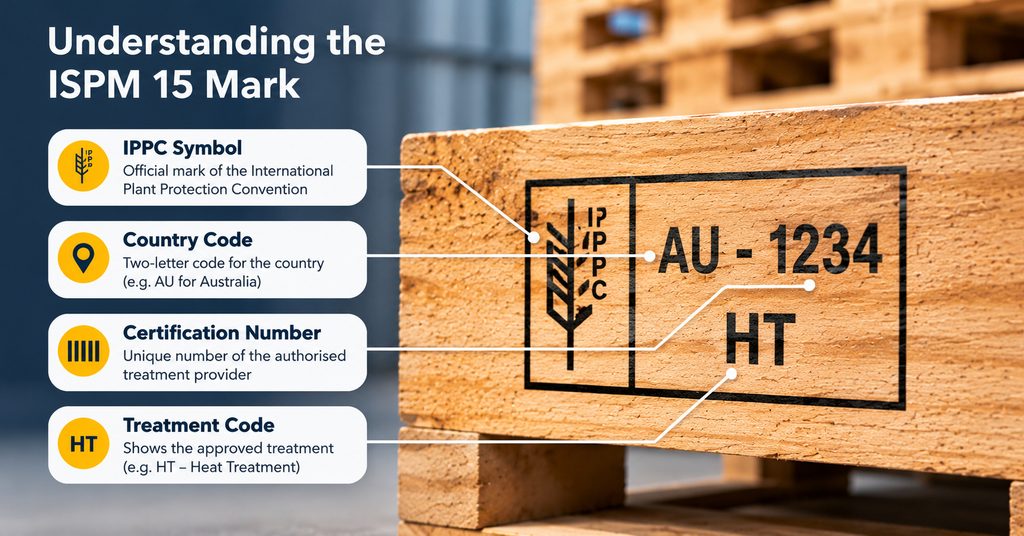
The internationally recognised mark contains several important elements:
1. IPPC Symbol
The mark includes the official International Plant Protection Convention symbol.
2. Country Code
A two-letter country code identifies where the packaging was treated or certified. For Australian-treated packaging, this is generally AU.
3. Certification Number
A unique number identifies the authorised treatment provider or manufacturer responsible for the packaging.
4. Treatment Code
The treatment code indicates which approved treatment was applied.
Common codes include:
- HT – Heat Treatment
- MB – Methyl Bromide Fumigation
- DH – Dielectric Heating
- SF – Sulphuryl Fluoride Fumigation
Exporters should check that the mark is legible and properly applied. A treatment certificate alone does not replace the required ISPM 15 mark where the importing country requires one.
Do Used or Reconditioned Pallets Meet ISPM 15 Requirements?
This is an important consideration for businesses purchasing used wooden pallets for export purposes.
A previously treated pallet may be reused if it retains its valid ISPM 15 mark and has not been altered. However, its condition and any signs of pest infestation must also be considered.
If a pallet has been repaired, altered, remanufactured or recycled, additional requirements apply. Under Australia’s export certification scheme, these activities must involve appropriately certified treatment providers and wood packaging manufacturers.
Businesses should not assume that every used or reconditioned pallet is suitable for international shipping simply because it was previously treated.
Before using a pallet for export, check:
- Whether the ISPM 15 mark is present and legible.
- Whether the pallet has been repaired or modified.
- Whether there are signs of pest infestation.
- Whether the pallet meets the importing country’s current requirements.
When in doubt, seek confirmation from an appropriately certified provider.
Which Countries Require ISPM 15 Compliance?
Many countries have implemented ISPM 15 requirements for wooden packaging used in international trade.
Requirements can vary depending on the destination country, the type of packaging and the applicable biosecurity rules.
Businesses exporting from Australia should confirm the current requirements for their destination before arranging pallet purchases or shipping.
It is also important to remember that an ISPM 15 mark does not automatically guarantee clearance. Importing countries can still inspect packaging and take action if they identify pests or other biosecurity risks.
How Australian Exporters Can Avoid Pallet Compliance Issues
A little preparation before shipping can help prevent unnecessary delays and additional costs.
Here are five practical steps businesses should follow:
1. Check Destination Country Requirements
Confirm whether the destination country requires ISPM 15-compliant wooden packaging and whether any additional conditions apply.
2. Purchase from Certified Suppliers
Where compliant export packaging is required, source it from manufacturers or treatment providers authorised under the relevant certification scheme.
3. Inspect Pallet Markings
Check the IPPC symbol, country code, certification number and treatment code before loading the shipment.
4. Inspect the Physical Condition
Look for damaged timber, signs of pest activity, excessive bark and unauthorised modifications.
5. Verify Documentation Requirements
Although the ISPM 15 mark is the primary evidence of compliance, some importing countries may request additional supporting documentation. Confirm these requirements before dispatch.
Final Thoughts
ISPM 15 plays an important role in protecting international trade and reducing the spread of timber pests.
For Australian exporters, choosing suitable wooden packaging and checking compliance before dispatch can help avoid unnecessary delays, additional costs and shipment complications.
Whether using new or previously treated pallets, businesses should verify the condition, certification markings and destination-specific requirements before sending goods overseas.
Understanding these regulations helps businesses make informed packaging decisions and prepare their export consignments more confidently.
References
- Australian Department of Agriculture, Fisheries and Forestry – Wood Packaging for Export
- Australian Department of Agriculture, Fisheries and Forestry – ISPM 15 for Export: Frequently Asked Questions
- Australian Department of Agriculture, Fisheries and Forestry – ISPM 15: The International Standard for Solid Wood Packaging Material
- International Plant Protection Convention (IPPC) – Regulation of Wood Packaging Material
