If you’re running a warehouse or managing freight in Sydney, pallets are one of those things you don’t think about—until something goes wrong.
Stacks don’t sit right. Forklifts slow down. Stock gets damaged. Suddenly, what looked like a minor purchase decision starts eating into your entire operation.
The short version: Buying bulk pallets in Sydney is the best way to cut your cost per unit and keep supply steady. But it only works if the pallets actually handle your specific workload, racking setup, and daily handling conditions.
From what we’ve seen across Western Sydney and Penrith, most pallet headaches don’t actually stem from the price. They happen because someone chose a pallet that didn’t quite fit the job.
Understanding Bulk Pallet Buying in NSW
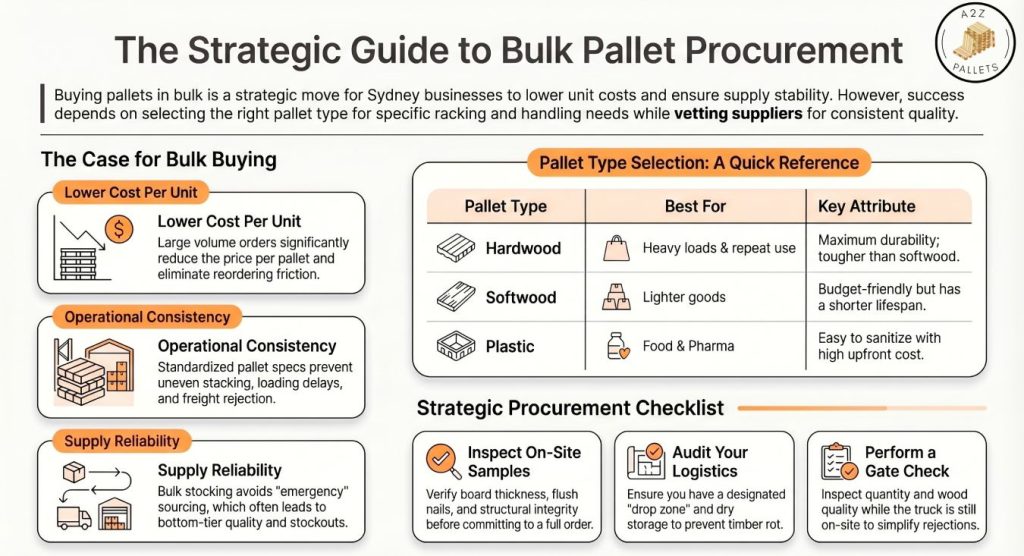
Buying in bulk is the standard move across NSW, especially for high-turnover warehousing, manufacturing, and transport. If you’re moving gear every day, ordering in small batches just creates constant friction.
A smart bulk order solves a few basic problems:
- It drives down your price per pallet.
- You stop wasting time on constant reorders.
- Your floor team knows exactly what to expect from every stack.
In Sydney, where turnarounds are fast and floor space is expensive, that consistency matters a lot more than most people realize.
What Are Bulk Pallets and Why Do Businesses Use Them?
Bulk buying just means moving to larger volumes instead of scrambling for small lots when you run short. For some Sydney crews, that’s 50–100 units at a time. For bigger distribution centres, we’re talking regular full truckloads.
This is a common route for resellers looking to move high volumes or those sourcing amazon return pallets to flip for a profit. However, for a standard warehouse, the goal isn’t just volume; it’s getting a fraction of their real value back through operational efficiency.
The main reason to go bulk? It removes the guesswork.
- You aren’t constantly hunting for a supplier who has stock.
- Your guys are handling the exact same pallet specs every shift.
- You avoid the “emergency” sourcing that usually results in bottom-tier quality.
We’ve seen plenty of sites where a mix-and-match pallet supply caused nothing but trouble—think uneven stacking, loading delays, or even freight getting rejected by the receiver. Bulk buying irons those kinks out.
Common Types of Pallets Available in Sydney
Not every pallet is built for the same rack, and this is where the mistakes happen. Most businesses in Sydney stick to a few proven options:
| Pallet Type | Best For | What to Know |
| Hardwood pallets | Heavy loads, repeat use | Tough as nails, but heavy and pricier. |
| Softwood pallets | Lighter goods | Budget-friendly, but they wear out faster. |
| Plastic pallets | Food & Pharma | Easy to wash and consistent, but high upfront cost. |
| Refurbished pallets | General warehouse use | Great value if the grading is actually decent. |
| Export pallets | International shipping | Must hit ISPM-15 compliance for customs. |
Timber is still the king of the Sydney warehouse because it’s easy to repair and gets the job done. Beyond just being practical, timber is the right approach for companies focused on sustainability, as wood is far easier to recycle or repurpose than composite materials.
Refurbished pallets are also massive in Western Sydney—especially where margins are tight—but you have to trust the supplier’s sorting process. That’s the dealbreaker.
If you aren’t sure which material fits your racking, you can view our range of durable pallet solutions.
Essential Considerations Before You Order
It’s easy to stare at the price tag when buying bulk. But on the floor, price isn’t the priority. A pallet that snaps under a load or jams a conveyor ends up costing way more than you “saved” upfront.
Checking Quality and Supplier Reputation
This is where the quiet failures happen. On a quote sheet, two suppliers might look identical. Same dimensions, same price. But once the truck unloads, the truth about your shipment comes out.
If you’re vetting pallet suppliers in Sydney, skip the fluff and ask:
- Are these actually refurbished, or just “used”?
- Is the board thickness consistent across the whole batch?
- What’s the true weight capacity?
- If a dozen turn up broken, what’s the replacement policy?
Most managers only ask these questions after a bad batch shows up. Don’t be that guy. Consistency is what you’re actually paying for—not just a one-off good delivery.
Finding a reliable refurbished pallet supplier in Sydney takes the guesswork out of quality control so you don’t have to inspect every single board yourself.
The “Pre-Purchase” Checklist:
Run through this before you sign the PO:
- Do these dimensions play nice with your specific racking and forklifts?
- Can they actually support your heaviest loads?
- Are the nails driven flush and boards secure?
- Any signs of rot, moisture, or weird smells?
- Do you actually have a dry spot to store them?
Handling and Storage Reality
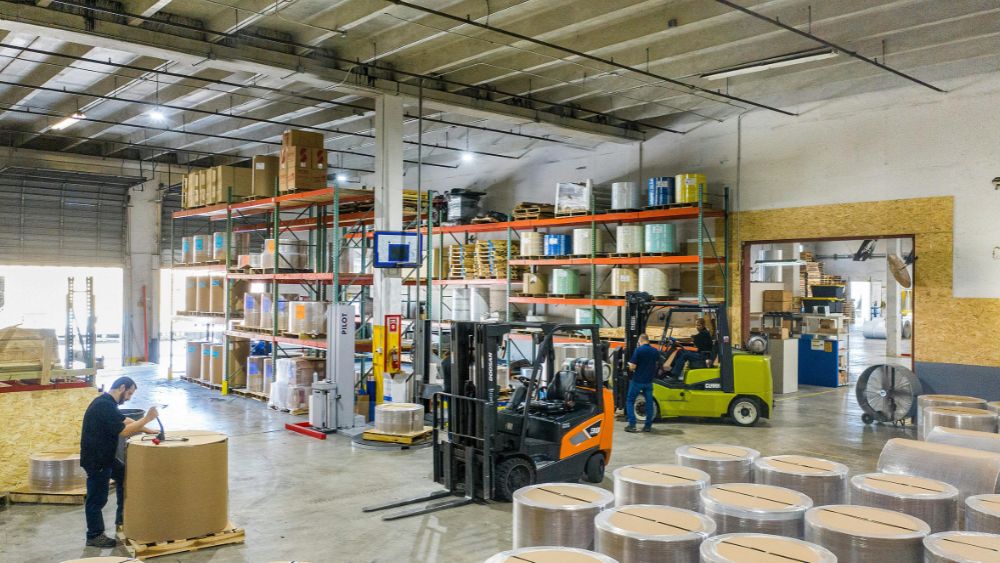
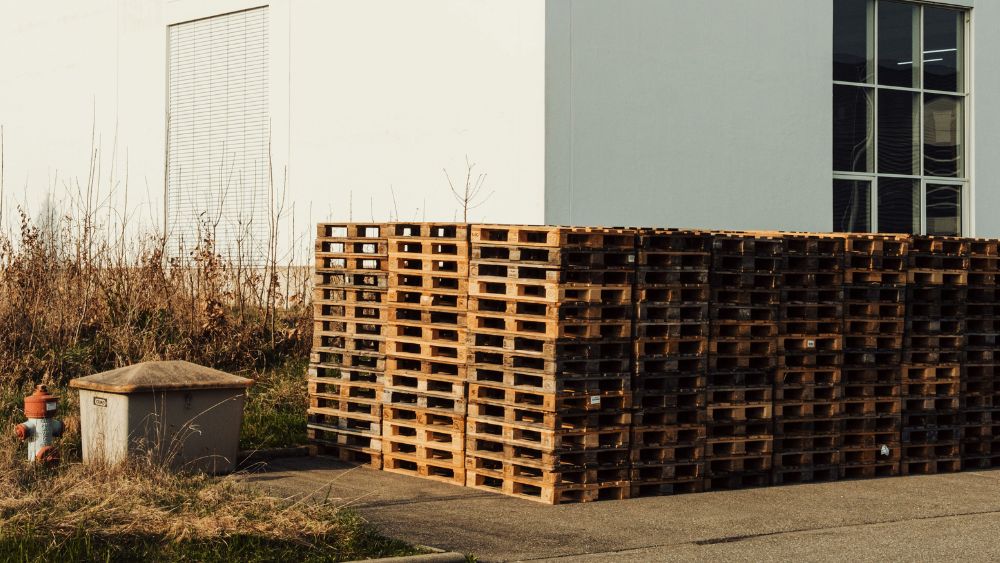
Bulk buying only pays off if your yard can actually take the delivery. It sounds like common sense, but we see this get botched all the time. If your warehouse is already jammed, a surprise truckload of pallets creates a massive bottleneck.
Think about the logistics:
- Where is the drop zone?
- Do you have an empty forklift and driver ready to unload?
- Is the storage area covered?
Pallets—especially timber—lose their structural integrity fast if they’re left sitting in the NSW rain.
How to Buy: A Practical Process
No need to overthink it, but a clear process keeps things moving.
Step 1: Focus on Local Wholesale Suppliers Stay local. Suppliers who already run routes through Western Sydney and Penrith understand the traffic, the access issues, and the typical warehouse setups in the area. Look at how they grade their stock rather than just the dollar amount.
Step 2: Inspect a Sample A quote is just paper. If you’re committing to a large volume, get a sample on-site first. In a high-speed warehouse, small defects are a nightmare. A warped board or a protruding nail might seem minor, but it’s enough to snag a wrap machine or damage client stock.
Step 3: Confirm the Logistics When you’re ready, be crystal clear on the “when” and “where.” Try to time the delivery for a quiet window in your workflow. If space is tight, ask the supplier about “staged” deliveries—two smaller drops instead of one massive headache.
Step 4: The Gate Check When the truck arrives, don’t just wave it through. Have someone check the quantity and the general state of the wood. It’s a lot easier to reject a bad stack while it’s still on the truck than it is a week later.
Quick Reference: Which Pallet Wins?
- Heavy machinery? Go Hardwood.
- Shipping to NZ or US? You need Heat-Treated (ISPM-15).
- Tight budget? Go Refurbished (but check the grade).
- Clean room/Food? Plastic is your only real choice.
How to Actually Get a Better Price
Bulk discounts usually aren’t about being a tough negotiator; they’re about being a good customer. You’ll get better rates if you:
- Stick to standard Australian sizes (1165mm x 1165mm).
- Set up a recurring supply schedule so the supplier can plan their stock.
- Use the right pallet for the right job so you aren’t overpaying for hardwood when softwood would do.
- Look into a pallet company that offers buy-back programs; sometimes you can move wooden pallets you no longer need for a credit toward your next bulk order.
Conclusion
Buying pallets in bulk doesn’t have to be a gamble. Get the basics right—the specs, the supplier, and your own storage space—and the rest takes care of itself. For businesses across Sydney, especially out west, pallets are the backbone of the operation. When the pallets are reliable, your whole day gets a lot easier.
Managing logistics is hard enough without worrying about your stacks failing, so feel free to reach out for a custom pallets quote tailored to your specific delivery volume.
FAQ
Stick to the industrial hubs like Western Sydney and Penrith. The suppliers out there are built for high-volume commercial needs and understand the local transport grid.
It’s all about the load. Hardwood for the heavy stuff, softwood for light goods, and plastic if you have to meet strict hygiene standards. If you want to save money without losing strength, a high-grade refurbished timber pallet is usually the sweet spot.
Definitely. Most Sydney suppliers will drop the per-unit price for full truckloads or ongoing contracts. Standardizing your sizes also helps them give you a better deal.
It can be. Quality varies wildly. You might get a great deal, or you might get a load of firewood that doesn’t fit your racks. Always inspect liquidation stock in person before the money changes hands.
