Used vs New Pallets : Practical Questions
If you manage a warehouse, factory, 3PL or export operation in Australia, pallet decisions rarely feel strategic — until something goes wrong. A collapsed pallet in high-bay racking, a rejected export container at port, or repeated product damage from weak boards can quickly turn a “cheap” decision into an expensive one.
The debate around used pallets vs new pallets in Australia isn’t simply about saving a few dollars per unit. It’s about matching pallet grade to load risk, racking design, automation, export compliance and long-term cost control.
With most Australian racking designed under AS 4084:2023 and standard pallets commonly built to AS 4068 dimensions (1165mm x 1165mm), pallet quality directly affects structural performance. At the same time, sustainability pressure is pushing more businesses toward refurbished pallets Australia-wide as part of circular economy initiatives.
The practical question isn’t “Are used pallets good or bad?” It’s where they make sense — and where they don’t. This guidance reflects common practices across Australian warehousing, 3PL and export operations and is based on how pallet performance interacts with racking systems, load ratings and compliance obligations in real working environments.
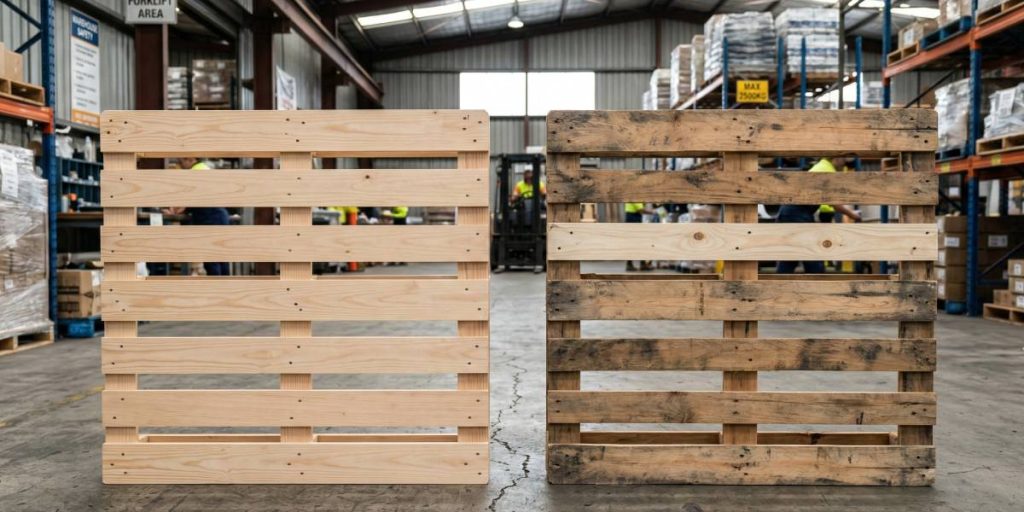
Used vs New Pallets in Australia – Summary
• Refurbished pallets are typically 30–50% cheaper upfront.
• New pallets provide higher consistency for automation and export.
• Both must meet structural and safety requirements under Australian standards.
• The best approach for most warehouses is a tiered mix based on risk.
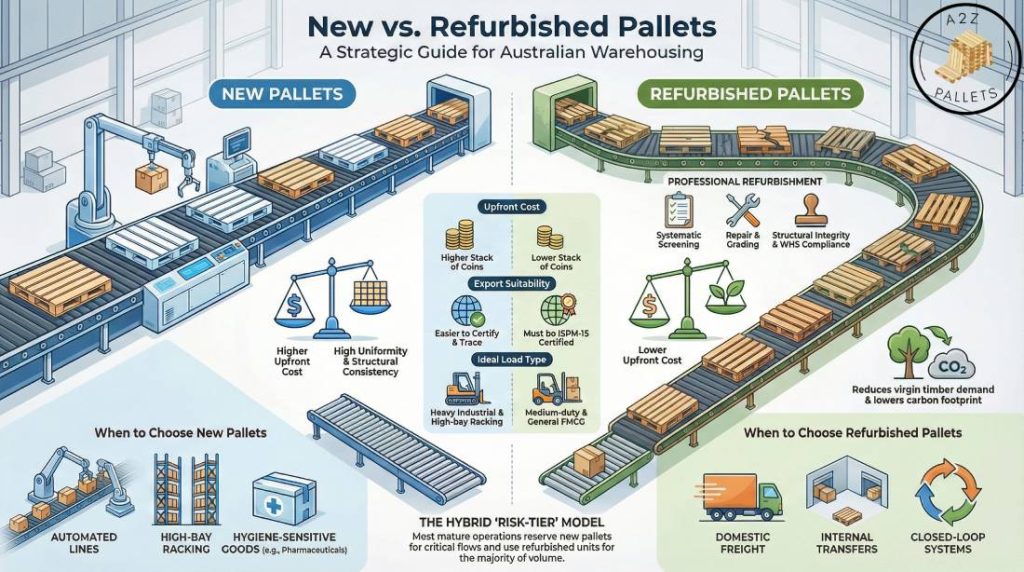
If failure risk is low, refurbished pallets often deliver strong value. If risk is high, new pallets provide predictability.
Key Differences Between Used and New Pallets
Materials, Grades, and Performance Expectations
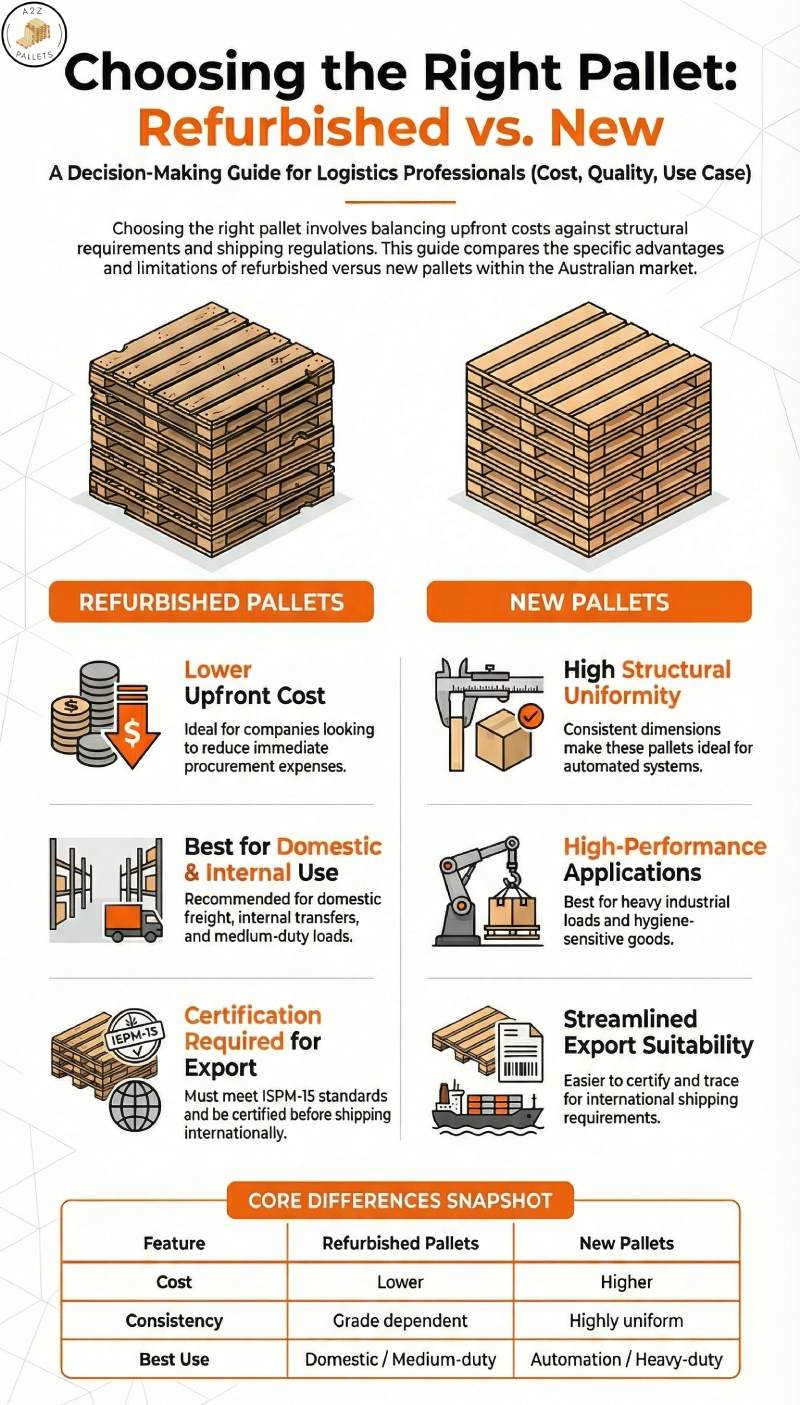
Most wooden pallets in Australia are made from softwood or mixed hardwood timbers. New pallets are typically built from fresh, structurally sound boards with predictable moisture content and no prior mechanical stress. That matters because load ratings are not theoretical. In a busy warehouse, pallets are bumped, dragged, double-handled and sometimes overloaded. Starting from a known structural baseline reduces guesswork.
Used or refurbished pallets start with a “core” that has already seen service. A quality refurbisher removes broken boards, replaces damaged components and re-nails or plates key joints to restore structural integrity. You still get a timber pallet that can perform reliably, but the appearance is more varied and the safe working load may differ from an equivalent new pallet, depending on grade.
In practice:
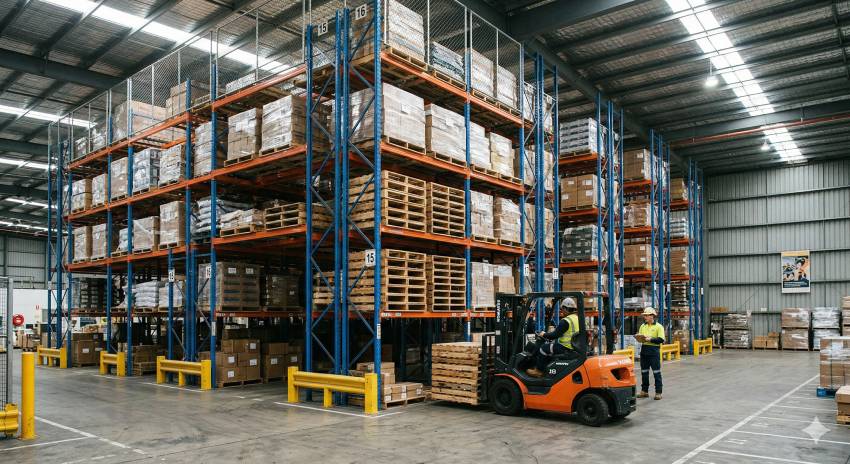
- New pallets are the better option where you must meet full nominal design load repeatedly (heavy manufacturing, bulk building products, dense liquids, high-bay racking).
- Refurbished pallets suit medium-duty applications, mixed freight, general FMCG, and many internal-transfer or closed-loop systems where minor cosmetic variation is acceptable.
The right approach is to match each pallet grade to a clearly defined load capacity and use case, then make sure that information is visible in your racking and handling procedures.
| Feature | Used Pallets | New Pallets |
|---|---|---|
| Cost | Lower | Higher |
| Sustainability | High | Moderate |
| Strength | Good (refurbished) | Maximum |
| Availability | Immediate | Production lead time |
For example, if your team regularly double-stacks beverage cartons in selective racking five levels high, a Grade B refurbished pallet may technically hold the weight — but it leaves less margin for handling impact. In contrast, the same pallet used for single-layer FMCG cartons on short domestic line-haul might perform perfectly for multiple cycles.
Availability and Customisation Options in Australia
New pallets offer the broadest options for customisation. You can specify footprint, deck type, timber species preferences, branding, and treatments such as ISPM 15 heat treatment for export. Lead times depend on volume and current timber market conditions, but large, repeat contracts can usually be scheduled with predictable supply.
Refurbished pallets Australia-wide are typically supplied in common standard sizes – for example, Australian standard 1165 × 1165 – with grades tied to cosmetic appearance, prior use and structural condition. Because stock is driven by what comes back through recovery streams, very niche sizes are less likely to be consistently available.
For many warehouses, a blended model works well:
- Use standard refurbished pallets for the majority of internal and domestic freight.
- Reserve new or custom-sized pallets for export, automation, or products that need tightly controlled deck gaps or specific dimensions.
A capable pallet supplier can hold buffer stock, manage pooling or recovery programs, and help you smooth out seasonal spikes. If you’re reviewing your pallet strategy, you can explore how A2ZPallets supports refurbished, new and export pallet supply across NSW.
Are Used Pallets Safe for Business Applications?
Common Safety Concerns with Used Pallets
When people hesitate about refurbished pallets, it is usually for safety reasons. Common concerns include:
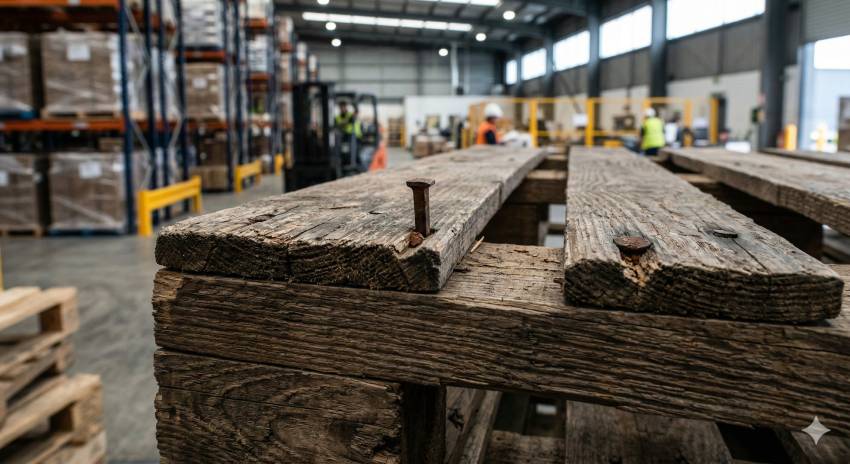
Hidden structural weakness from previous impacts or overloading is one concern. So are protruding nails or cracked boards that can catch on wrap or cut into cartons. In some supply chains, contamination from spills or unknown previous cargo is also raised, especially where pallets have moved through multiple environments.
Those risks are real — but they usually stem from poor process, not from the concept of refurbishment itself. The difference between a risky used pallet and a reliable refurbished pallet is inspection discipline. They are precisely what a professional refurbishment program is designed to eliminate through systematic wooden pallet inspection, repair and grading.
The question is not “Are used pallets inherently unsafe?” but “Does my supplier have robust inspection and repair standards, and do I have internal controls to keep damaged pallets out of service?”
Inspection, Refurbishment, and Certification Processes
A reputable pallet recycler will have a defined process for inspection and repair at scale. While methods vary, a typical program includes:
- Initial screening: Pallets are visually checked; units with major damage, rot, or contamination are quarantined or dismantled for parts.
- Detailed wooden pallet inspection: Each pallet is assessed for stringer and deckboard condition, nailing patterns, squareness and structural soundness.
- Repairs and refurbishment: Broken boards are replaced, loose nails are removed and re-driven, and metal plates may be added at high-stress points to restore strength.
- Grading: Pallets are sorted into grades based on structural integrity and cosmetic appearance, so you can align them with appropriate loads.
- Treatment (where required): For export, pallets must comply with ISPM 15 – meaning heat treatment or approved fumigation, then marking with the IPPC stamp and associated certification under schemes such as the Australian Wood Packaging Certification Scheme.
For ISPM 15 heat treatment, the core of the timber is raised to at least 56°C for a minimum of 30 minutes, killing pests and pathogens without chemical residues. Certified facilities record each batch and can supply treatment certificates on request.
If you are handling food, pharmaceuticals or other sensitive goods, you can work with your pallet supplier to restrict accepted pallet histories and, if required, specify new or dedicated pallets for those lines.
Sustainability and Environmental Benefits of Used Pallets
Refurbished pallets sit squarely in the circular economy. Instead of following a “take–make–dispose” model, timber is kept in productive use for as long as possible through reuse, repair, and recycling.
Key pallet recycling benefits include:
- Reduced demand for virgin timber, which helps relieve pressure on forests and plantations.
- Lower energy use compared with manufacturing new pallets, which can reduce the carbon footprint of your packaging choices.
- Less waste to landfill, because broken pallets can be stripped for parts and, at end of life, chipped for mulch, animal bedding or bioenergy.
For organisations with emissions or waste reduction targets, switching part of your pallet spend to refurbished units is a tangible lever you can pull without re-engineering your entire supply chain.
Compliance with Industry Standards and Certifications
In Australia, pallet compliance Australia-wide touches several areas:
- Work health and safety (WHS): You have a duty to provide a safe workplace, which includes safe plant and equipment such as pallets and racking. SafeWork guidance for pallet racking emphasises correct design, rated loads, inspection and maintenance to prevent collapse and falling objects.
- Pallet racking standards: AS 4084:2023 sets out the design, installation, inspection and maintenance requirements for steel storage racking, and assumes pallets will be compatible and used within rated loads.
- Export requirements: Any solid wood packaging used for international shipments generally must comply with ISPM 15, requiring approved treatment and marking to prevent the spread of pests.
Used pallets can absolutely meet these expectations, provided they are structurally sound, appropriate to the load, and – where relevant – treated and marked to ISPM 15 by a certified facility. Ultimately, compliance responsibility sits with the business operating the warehouse. Whether you purchase new or refurbished pallets, you must ensure they are fit for purpose and aligned with the rated load of your racking and handling equipment.
Key Standards Referenced in Australia:
• AS 4068 – Flat pallets for materials handling
• AS 4084:2023 – Steel storage racking
• ISPM-15 – International phytosanitary standard for wood packaging
• AWPCS – Australian Wood Packaging Certification Scheme
Understanding how these standards interact is essential when selecting pallets for domestic and export applications.
If you’d like to talk through your load types or racking setup, you can speak with our team for a practical assessment.
Corporate Sustainability Goals and Practices
Many ESG and sustainability frameworks now look beyond energy and transport to packaging and materials. Integrating refurbished pallets into your operation can support:
- Emissions reduction, by lowering the embodied carbon in your packaging.
- Waste reduction and landfill diversion metrics, through pallet repair and recycling programs.
- Responsible sourcing objectives, especially where your pallet supplier also uses timber from sustainable plantations for new products.
Because pallets are so visible in your operation, they are also an easy story to communicate in sustainability reports – demonstrating practical changes, not just policy statements.
Quality and Durability
Inspection and Refurbishment Process
Quality refurbished pallets do not happen by accident; they are the result of a controlled refurbishment workflow. As mentioned earlier, that process typically covers:
- Grading: Pallets are evaluated for remaining structural capacity. Higher grades go into demanding applications; lower grades are reserved for lighter loads or one-way trips.
- Component replacement: Cracked or heavily worn boards are replaced; stringers with notch blow-outs may be plated or swapped entirely.
- Structural reinforcement: Mechanical fasteners and nail patterns are checked; critical joints can be reinforced to extend service life.
If you are buying at volume, it is worth asking your supplier to walk you through their grading criteria, repair standards and inspection intervals. That conversation will tell you more than any brochure.
If you visit a refurbishment yard, the difference between a disciplined operation and a loose one is obvious within minutes. Pallets are either flowing through clearly defined inspection stations — or they are simply being stacked and resold.
Consistency Across Pallet Inventory
A common worry with refurbished pallets is inconsistency: different heights, board gaps or stringer profiles causing issues in automated lines, conveyors or high-bay racking. A good supplier mitigates this with:
- Standardised grades tied to specific dimensions and construction styles.
- Sorting out odd sizes or incompatible designs into separate streams.
- Regular audits and feedback loops when you report issues from your site.
Some businesses choose to standardise around one or two refurbished sizes for general freight and keep dedicated new pallets for automation or high‑risk products. That way you get cost and sustainability benefits without compromising line performance.
Eco-Friendly Yet Reliable
There is sometimes a perception that “eco-friendly” means “second-best”. With pallets, that does not hold if the refurbishment process and grade selection are sound. Refurbished pallets are repaired to meet defined structural and operational criteria, while reducing the need for new timber and avoiding unnecessary waste.
For many Australian warehouses, the most reliable, lowest-risk approach is a mixed pool: refurbished pallets where they make sense, and new pallets where there is a clear technical or compliance reason. Your pallet supplier should be willing to talk through where each type fits in your specific operation.
Cost Comparison: Used vs New Pallets
Purchase Price Differences and Ongoing Cost Factors
On a unit basis, the cost of used pallets is usually lower than new because you are paying for repair and sorting rather than fresh timber and full manufacturing. That makes refurbished pallets attractive when you are under budget pressure or dealing with high pallet churn.
But purchase price alone rarely tells the full story. A pallet that saves you $8 upfront but fails under load, damages stock or slows down dispatch is not actually saving money. When comparing used pallets vs new pallets, you should also consider:
You also need to think about lifespan in your specific environment. A refurbished pallet that performs well in a dry FMCG warehouse may degrade faster in a harsh steel yard. Staff behaviour matters too — when pallets look older, they are sometimes treated as expendable, which increases breakage.
Downtime is another hidden cost. A pallet failure that interrupts picking or damages product quickly erases any upfront savings. Finally, recovery and buy-back programs can materially change the maths, especially if your supplier supports structured recycling.
Total cost of ownership often favours a well-managed refurbished pallet program for general freight, while high-spec new pallets remain the right call for certain critical flows. In practice, very few operations get this calculation perfect on the first attempt.
How Choosing Used Pallets Affects Packaging Costs
Pallet choice flows through to your broader packaging and logistics budget in several ways:
- Unit load design: Deck gaps, stiffness and dimensions affect carton selection, dunnage requirements and how much product you can safely stack.
- Stretch wrap and restraint: More variable or rough deck surfaces may demand slightly more wrap or different wrapping patterns to achieve the same stability as smoother, brand-new decks.
- Freight efficiency: If refurbished pallets are a consistent size and in good condition, they can carry the same payload per truck or container as new pallets. If dimensions are inconsistent, you may end up with more toppling risk or need extra packaging to compensate.
- Damage rates: Frequent board breakages or protruding fasteners can cut into cartons and product, increasing write-offs and claims. This is why the quality and grade of refurbished pallets matters more than the simple label “used”.
For many Australian operations, a shift to high-grade refurbished pallets in suitable lanes actually reduces total packaging costs, because you are freeing up budget that would otherwise be spent on new pallets and disposal, and you are working with a supplier who can help optimise pallet and packaging choices together.
How to Decide for Your Warehouse
If you are unsure which pallet mix fits your operation, start with three questions:
1. What is the heaviest load we routinely rack?
2. How many pallets leave our control permanently?
3. Where would a pallet failure cost us the most?
The answers usually make the decision clearer than any price comparison.
Conclusion
There is no universal winner in the used pallets vs new pallets debate. The better question is: where is the risk in your operation?
- If failure would create export delays, automation shutdowns, or high-value product damage, new pallets are often the safer commercial decision.
- If the freight is domestic, loads are moderate, and you manage pallet condition actively, refurbished pallets Australia suppliers provide can deliver substantial savings without compromising safety.
- Most mature warehouse operations do not choose one or the other. They allocate pallet grades by risk tier — reserving new pallets for critical flows and using high-grade refurbished pallets across the majority of volume.
That balance is where cost efficiency, compliance and sustainability genuinely meet. And in reality, most businesses arrive at that balance through trial, adjustment and a few hard lessons — not through a single procurement decision.
Frequently Asked Questions About Used vs New Pallets in Australia:
Yes. Inspection is non-negotiable. A professional supplier should inspect and grade pallets before delivery, but your warehouse team should also perform basic visual checks. Split boards, protruding nails or damaged stringers should be tagged out immediately.
For export shipments, both new and refurbished pallets must comply with ISPM-15 requirements, including approved heat treatment and visible certification stamps.
Yes. Refurbished pallets extend the useful life of timber, reducing demand for virgin wood and lowering the environmental footprint associated with pallet manufacture. When pallets finally reach end of life, the timber can be chipped and used in applications such as mulch, bedding or biomass energy, further reducing waste to landfill.
From a circular economy perspective, pallet repair and recycling programs are an effective way for logistics and warehousing operations to contribute to emissions reduction and resource efficiency targets without major capital investment.
“Better” depends on the mix of your products, customers and risk profile. If you are exporting regularly, operating high-bay racking, or running automated lines, you may lean more heavily on new pallets for those flows, with ISPM 15 compliant treatment where required.
If much of your freight is domestic, non-automated or internal transfer, high‑grade refurbished pallets can offer strong performance at a lower unit cost, while also supporting your sustainability agenda. Many Australian businesses choose a hybrid approach, using both, each assigned to clearly defined applications.
The main differences are:
History and appearance: New pallets are uniform and unused; refurbished pallets have been repaired and may show cosmetic variation.
Cost: The cost of used pallets is typically lower because you are paying for refurbishment instead of full manufacturing from new timber.
Customisation: New pallets offer broader customisation options, especially for non-standard sizes or specialised export requirements.
Sustainability profile: Refurbished pallets contribute more strongly to timber reuse, waste reduction and circular economy outcomes.
With proper grading and inspection, both can be safe and compliant when matched to the right application.
Used pallets can reduce your packaging and logistics spend in several ways. Lower unit pallet costs free up budget that can be reinvested in better cartons, dunnage or protective packaging where it matters most.
If refurbished pallets are well-graded and consistent, they will carry the same load as new pallets, so your freight efficiency and stacking patterns remain unchanged. Combined with pallet repair and recovery programs that minimise disposal costs and landfill fees, this often results in a lower total cost of ownership for your packaging system, particularly in domestic and internal supply chains.
