
The view from a Sydney warehouse loading dock has changed over the last few months. It used to be that pallets were the background noise of logistics—something you ordered on autopilot and expected to arrive like clockwork. That certainty has evaporated. Between congestion at Port Botany and the ripple effects of international freight volatility, securing enough pallets to move stock has become a genuine challenge for procurement teams.
On the warehouse floor, the conversation has shifted. Managers are no longer just looking for any pallet—they are looking for supply consistency in a market where prices fluctuate and lead times are unpredictable. When a truck is waiting and you’re short on pallets, the debate between new and used quickly becomes secondary to operational continuity.
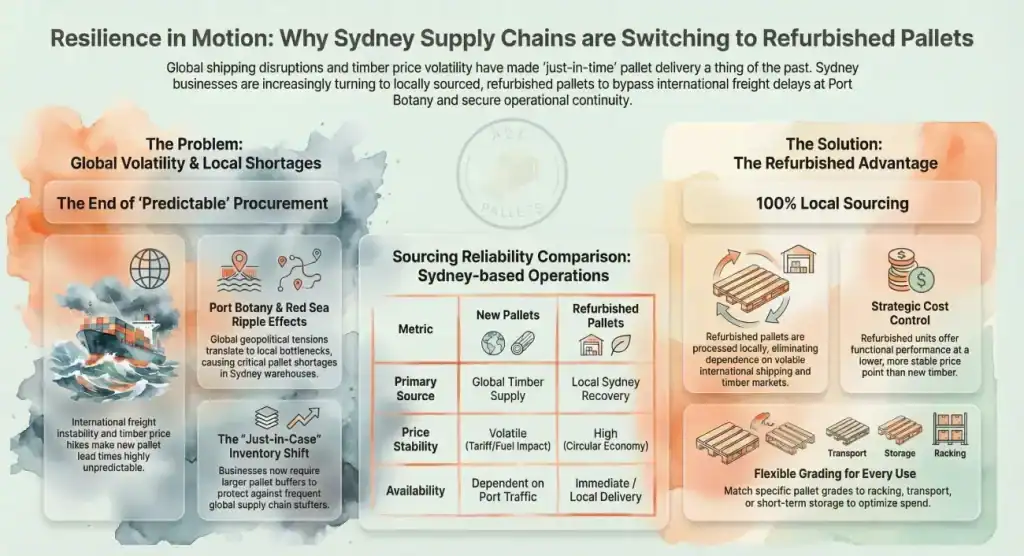
This is where refurbished pallets in Sydney have moved from being a budget alternative to a practical, frontline solution. In practical terms, supply chain disruptions in Sydney are no longer isolated events. Businesses are dealing with ongoing supply chain challenges, pallet shortages, and fluctuating lead times that directly impact warehouse efficiency in the pallet industry. This is why refurbished pallets in Sydney are becoming a preferred option for maintaining operational continuity without relying entirely on global supply chains.
Why are refurbished pallets in Sydney gaining importance during supply chain disruptions?
Refurbished timber pallets in Sydney are gaining importance because they reduce reliance on global supply chains. With freight delays, timber price fluctuations, and inconsistent lead times, businesses are turning to local pallet supply to maintain operational continuity, improve operational efficiency, and avoid disruptions caused by pallet shortages.
If you’re still comparing options, understanding the used vs new pallets in Australia can help clarify what works best for your operation.
Refurbished Pallets in Sydney
Refurbished pallets in Sydney are increasingly becoming a strategic solution for businesses navigating supply chain disruptions, helping to reduce transportation costs. Unlike new pallets that depend on global timber supply and international freight, refurbished pallets are sourced locally, making them more accessible during periods of supply instability.
This local availability improves operational efficiency by ensuring warehouses can maintain consistent pallet flow even when global supply chains face delays in the global economy. During pallet shortages in Sydney, refurbished pallets provide a buffer that helps businesses avoid costly disruptions to production and dispatch.
Refurbished pallet suppliers in Sydney also offer flexibility in grading, allowing businesses to match pallet quality with specific use cases such as racking, transport, or short-term storage. This adaptability is critical in modern supply chain management, where supply chain managers prioritize cost control and reliability working together.
To understand why this shift is happening, it’s important to look at what’s changed in global supply conditions.
Understanding Recent Global Supply Chain Disruptions
If you’ve spent any time managing a warehouse or manufacturing operation recently, you’ve likely seen the shift from “just-in-time” to “just-in-case” inventory models. This change hasn’t happened in isolation—it’s the result of ongoing disruptions across global supply chains in real time.
In reality, these disruptions, including the Red Sea Crisis, are driven by a mix of geopolitical tensions, shifting trade routes, and ongoing instability in international freight networks. For Sydney businesses, the impact is less about dramatic breakdowns and more about persistent delays, unpredictability, and cost fluctuations.
From a practical supply chain management perspective, this has exposed the supply chain risks of relying heavily on international sourcing. Businesses are now rethinking procurement strategies and incorporating local suppliers to improve reliability and responsiveness.
These changes don’t just affect imports—they directly reshape how pallet supply works locally in Sydney.
Key Events Impacting International Supply Chains
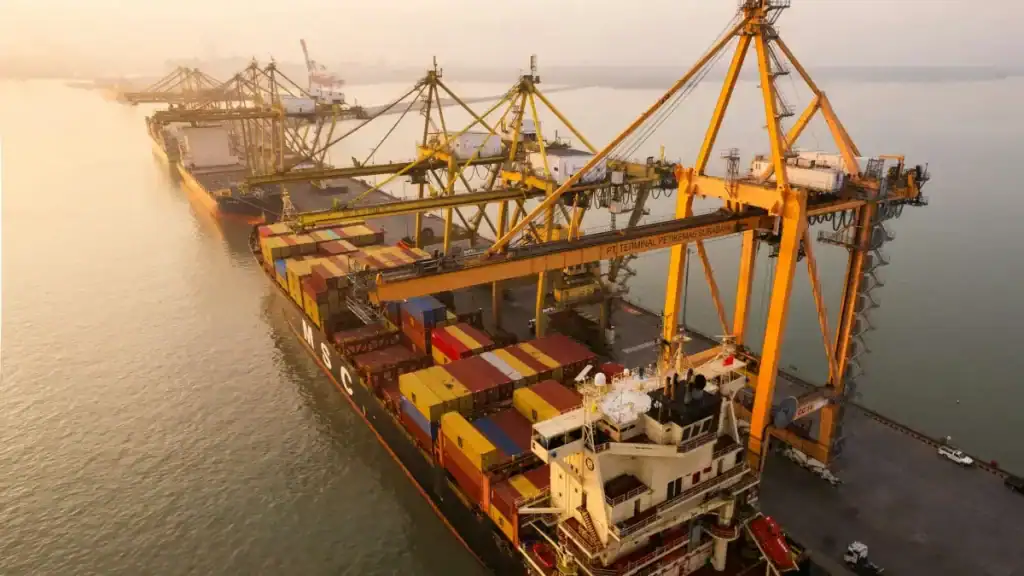
Recent global disruptions have changed how goods move, but the effects often appear gradually. Instead of complete stoppages, businesses experience delays, rerouting, and inconsistent supply. According to global supply chain reports, disruptions in freight and raw material supply have become more frequent in recent years.
When vessels take longer routes to avoid congested or unstable regions, transit times increase. This affects not only cargo but also pallets and raw materials moving through the same networks.
For Sydney-based operations, this means inbound timber and pallet components no longer arrive on predictable schedules. Even when shipments reach port, terminal congestion can create additional delays, disrupting production and dispatch timelines.
One of the most immediate consequences of these delays is pallet shortages in Sydney. When pallet supply becomes inconsistent, it creates bottlenecks across supply chain operations—affecting loading schedules, storage planning, and transport efficiency, especially during extreme weather events.
Over time, these pressures have changed how businesses approach pallet sourcing altogether.
How Trade Wars and Tariffs Affect Australian Imports
It’s not just the movement of goods that has changed—the cost structure has shifted as well. Trade tensions and evolving tariff policies have increased the cost of raw materials, particularly timber in North America.
Because timber is globally traded, supply fluctuations in one region can influence pricing in Australia. This has made new pallet pricing less predictable, with significant disruptions causing procurement teams to face shorter quote validity and frequent price changes.
For many Sydney businesses, this uncertainty has made long-distance sourcing less attractive. Instead, there is a growing shift toward local pallet supply options that offer more stable pricing and faster availability.
Wooden pallets remain the most widely used option due to their durability and repairability, particularly in refurbished markets and container shipping. While plastic pallets are used in specific industries, they are generally more expensive and less flexible for standard warehouse operations. This makes refurbished wooden pallets a practical choice for most supply chain environments.
Additional pressures such as fuel cost fluctuations, port congestion, and regulatory changes have further increased supply chain complexity. As a result, many businesses are adopting hybrid sourcing models—combining global procurement with local supply to improve customer satisfaction and reduce risk.
The Effect of Freight Delays on Sydney Businesses
Sydney is a major gateway for imports, but that also makes it vulnerable to disruption. When delays occur at Port Botany, the impact extends across the entire logistics network—including increased transport costs from container yards to distribution centres in Western Sydney.
The biggest challenge is planning uncertainty. If inbound shipments are delayed, businesses struggle to forecast pallet requirements accurately, impacting supply chain visibility. During peak periods, this often leads to last-minute sourcing decisions, usually at higher cost.
In practice, this is why many operations shift toward local pallet supply when delays become unpredictable. Reliable access to pallets becomes less about cost optimisation and more about maintaining operational flow.
These disruptions are not limited to freight delays alone. They affect supply chain management, inventory planning, and operational efficiency across manufacturing facilities and distribution centers. As businesses shift toward more resilient supply chain operations, there is increasing interest in local sourcing, predictive planning, and reducing dependency on volatile international supply networks.
The Changing Pallet Landscape in Sydney
The pallet market in Sydney has evolved significantly in recent years. Businesses are no longer treating pallets as a simple commodity—they are now part of broader supply chain decision-making.
Increased Demand for Pallets in Response to Global Disruptions
As global supply chains become less predictable, warehouses are holding more stock as a buffer. This includes pallets, which remain in circulation for longer periods.
This reduced circulation creates tighter availability across the market. As more businesses compete for limited stock, demand for refurbished pallets in Sydney continues to rise.
Timber Constraints and Pallet Supply
Changes in timber availability, sourcing regulations, and treatment requirements have added pressure to new pallet production. While supply hasn’t disappeared, consistency has become a challenge.
In many cases, refurbished pallets provide a more stable alternative, especially when sourced from reliable local suppliers with structured repair processes.
The Rise of Pallet Shortages in Sydney
Pallet shortages in Sydney are no longer isolated events. They tend to occur during peak business cycles such as retail surges, manufacturing demand spikes, and seasonal inventory build-ups.
On the warehouse floor, this often results in operational slowdowns, delayed dispatch, and inefficient use of space.
Businesses respond by diversifying sourcing strategies, adjusting pallet grades, or increasing inventory buffers—each with its own trade-offs.

Why Refurbished Pallets Are a Practical Solution
At a fundamental level, a pallet only needs to perform safely and reliably under load. Refurbished pallets meet this requirement while also addressing cost, availability, and sustainability concerns.
Many Sydney businesses are already shifting toward refurbished pallets—not just for cost, but for flexibility and reliability. Here are the benefits of using refurbished pallets for your business in more detail.
Cost Advantages During Supply Pressure
In volatile markets, refurbished pallets offer more predictable pricing. Businesses are paying for functional performance rather than new raw materials.
While there may be cosmetic differences, many operations find that refurbished pallets provide sufficient performance at a significantly lower cost.
Local Availability Amidst International Delays
Refurbished pallets are sourced and processed locally, meaning they are not dependent on international shipping timelines.
This allows Sydney businesses to maintain continuity even when global supply chains are disrupted. Reliable local suppliers play a key role in ensuring consistent pallet availability.
Environmental Benefits and Sustainability
Refurbished pallets extend the lifecycle of timber, reducing waste and lowering demand for new raw materials.
This supports circular economy practices while maintaining operational efficiency, making it a practical sustainability approach rather than a theoretical one.
Another practical advantage of refurbished pallets is their repairability. Instead of discarding damaged pallets, they can be restored and reintroduced into circulation. This reduces waste while maintaining a steady pallet supply in Sydney, even when new pallet production faces constraints.
Beginner’s Guide to Using Refurbished Pallets in Sydney
Essentials You Need to Get Started
Start by identifying how pallets are used in your operations—whether for storage, transport, export, or internal movement. Each use case has different requirements.
When businesses buy pallets in Sydney, reliability and response time often matter more than price alone.
Selecting the Right Refurbished Pallets
The right pallet depends on load type, handling frequency, and storage conditions. Many operations benefit from using a mix of pallet grades to balance cost and performance.
Safety and Quality Considerations
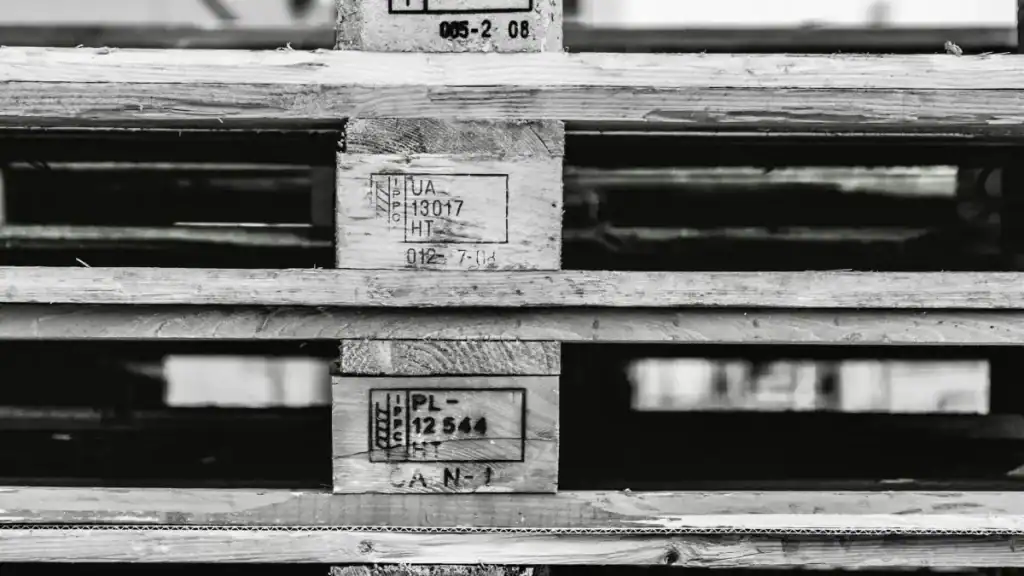
Pallets should be structurally sound, with no exposed nails or significant damage. Consistent grading and repair standards are essential for maintaining safety.
Step-by-Step Guide to Buying and Using Refurbished Pallets
Step 1: Identify Requirements
Define load capacity, handling conditions, and usage frequency.
Step 2: Choose Reliable Suppliers
Work with suppliers who understand warehouse operations and can deliver consistently.
Step 3: Inspect Quality
Check structural integrity and repair standards before use.
Step 4: Integrate into Operations
Align pallet supply with workflow to avoid last-minute sourcing issues.
The Future of Refurbished Pallets in Sydney
As supply chain disruptions continue to influence global trade, Sydney businesses are shifting toward more resilient and locally anchored sourcing strategies.
Refurbished pallets are becoming a core part of this shift, offering consistent availability, reduced procurement risk, and improved operational efficiency.
Businesses that adopt local pallet supply models early are better positioned to maintain stability, even when global supply chains remain unpredictable.
How can Sydney businesses reduce pallet supply risks during disruptions?
Sydney businesses can reduce pallet supply risks by shifting toward local pallet sourcing, maintaining buffer stock, and working with refurbished pallet suppliers who offer consistent availability and continuous monitoring. Unlike imported pallets that depend on global shipping timelines, refurbished pallets provide faster turnaround, predictable supply, and cost control.
Businesses should also review their inventory management approach, moving from “just-in-time” to more flexible models that allow for supply fluctuations. Combining local sourcing with better demand forecasting helps reduce exposure to supply chain disruptions and ensures smoother warehouse operations, thereby enhancing overall supply chain efficiency.
Buying and maintaining refurbished pallets in Sydney
Businesses looking to buy pallets in Sydney should evaluate suppliers based on grading consistency, repair standards, and delivery timelines. , and build strong supplier relationships. Reliable suppliers offer clearly sorted pallet grades suitable for different applications such as racking, transport, or export use.
Regular inspection and basic pallet repair practices can extend pallet life and reduce replacement frequency. This ensures better cost control while maintaining safe handling conditions across warehouse operations.
If you’re sourcing locally, it also helps to explore how refurbished pallets in Penrith and Western Sydney are supplied and delivered in real-world scenarios.
Getting Quotes and Working with Refurbished Pallet Suppliers in Sydney
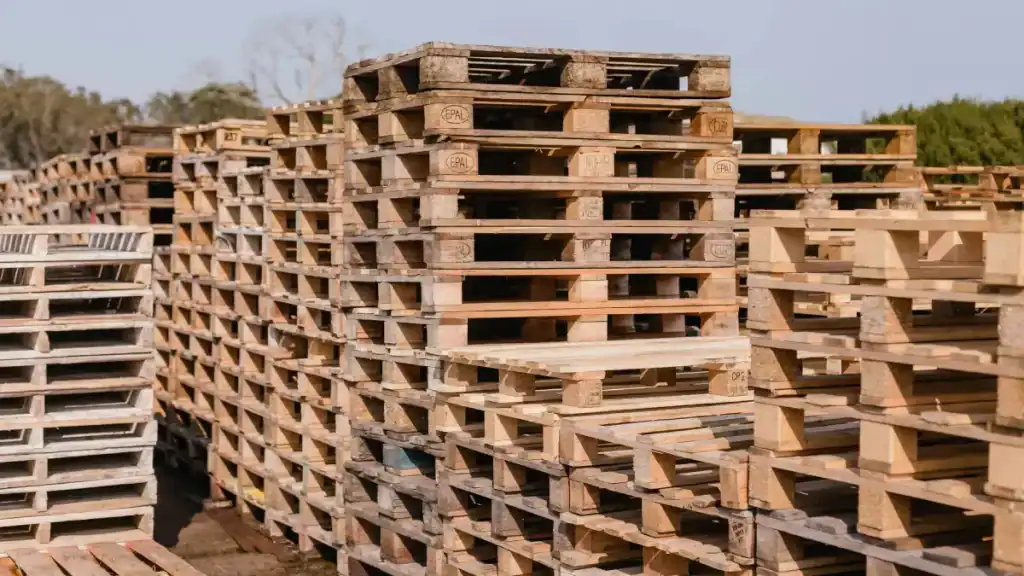
For businesses actively sourcing pallets in Sydney, the process typically starts with understanding volume requirements, pallet specifications, and delivery timelines. Reliable suppliers provide clear grading standards, consistent availability, and transparent pricing.
When requesting quotes, businesses should look beyond price alone. Factors such as delivery reliability, response time, and consistency in pallet quality play a critical role in long-term supply stability.
Working with a dependable local supplier helps reduce uncertainty in pallet supply, especially during periods of supply chain disruption in Sydney. Over time, strong supplier relationships can improve procurement efficiency and reduce last-minute sourcing risks.
Conclusion
The reality of the Sydney logistics market is that supply conditions are no longer predictable. Businesses are adapting by prioritising reliability over ideal scenarios.
Refurbished pallets offer a practical way to maintain operations when supply chains become inconsistent. While they may not suit every application, they provide a stable and effective solution for a wide range of warehouse needs.
Ultimately, consistent pallet supply keeps operations moving—and in today’s environment, that reliability matters more than ever.
Related Questions
Businesses expand sourcing options, including refurbished pallets, recovered stock, and adjusted inventory strategies.
Work with suppliers who follow structured repair and grading processes and perform internal checks.
They are locally available and less affected by global delays.
Focus on load capacity, condition, delivery reliability, and supplier consistency.
